



Data intelligence for how logistics operations actually run
Logistics operates in constant motion. Capacity shifts, demand volatility, and execution disruptions leave little room for delayed decisions. LakeStack helps logistics teams gain real time visibility, act faster, and stay in control when conditions change.


Data intelligence, enabling logistics performance
Logistics performance depends on speed, coordination, and execution across networks. Intelligence must surface risk and exceptions early, where they impact service levels, cost, and customer commitments.
30% lower expediting and premium freight costs
35% faster resolution of delivery and execution issues

Up to 40% fewer missed SLAs and service failures
30–35% higher planning accuracy for volume and cost
What you can achieve
Real execution scenarios where shipment, capacity, and service decisions determine customer outcomes.

Leaders gain advance visibility into lane level and carrier capacity risks, allowing teams to secure alternatives before service commitments are impacted.

Underperforming lanes, carriers, and facilities are identified early, reducing late surprises and reactive escalation.

Forecasted volumes are aligned with actual network capacity, improving confidence in cost and service commitments.

Earlier risk detection gives teams time to choose cost effective recovery options instead of defaulting to spot rates and premium transport.

Operations, planning, and customer teams work from a single shared view during disruptions, accelerating decisions when time matters most.
Turn logistics complexity into execution control
Integrates with the logistics systems you already run
Logistics operations rely on multiple execution systems across transportation, warehousing, finance, and partners. LakeStack connects to those systems directly and unifies operational signals without replacing what already works.


Frequently asked questions
Common data sources include shipment and order events, carrier performance data, lane and rate data, warehouse execution signals, inventory movements, and customer service events. These signals are normalized into a shared operational model so teams can analyze performance, risk, and exceptions across the entire logistics network.
Data from different systems is standardized, validated, and reconciled as part of ingestion. Conflicting timestamps, identifiers, and status definitions are resolved so teams work from one consistent version of operational truth. This reduces downstream reconciliation effort and improves confidence during execution and escalation reviews. Book a data discovery workshop to assess data quality gaps across your logistics systems.
Yes. LakeStack supports near real time ingestion for execution critical data such as shipment status, carrier updates, and facility events. This allows teams to detect delays, capacity shortfalls, and service risks early enough to intervene, rather than reacting after SLAs are missed or costs have already escalated.
Exceptions are derived by comparing live operational signals against plans, thresholds, and commitments. Instead of generating noise, the focus is on highlighting what materially impacts service levels, cost, or customer outcomes. This helps teams prioritize action during high volume execution periods.
Traditional reporting stacks rely on delayed extracts, manual transformations, and static dashboards. LakeStack focuses on continuous data flow, automated modeling, and operational context so insights remain relevant during execution, not just after the fact. Book a demo to compare execution level intelligence with traditional logistics reporting.
Data security follows enterprise grade practices, including role based access, encryption, and auditability. Access can be controlled by role, region, customer, or partner to ensure sensitive operational and commercial data is protected.
The approach is designed to reduce internal engineering load. Instead of building custom pipelines and data models, teams leverage pre built integrations and operational models. Internal effort is focused on validation and adoption, not infrastructure build out. Calculate ROI to estimate savings from reduced engineering effort and faster execution decisions.
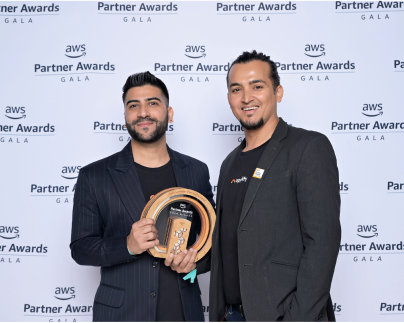
Built by the “AWS Rising Star Partner of the Year”
LakeStack is built by the team at Applify, a team that has spent more than a decade designing, deploying, and operating complex data platforms on AWS for enterprises across industries.
- 12+ years building production systems on AWS
- 100+ AWS certifications across the team
- 6 AWS Competencies and 9 AWS Service Validations
- 500+ SMBs served across the globe










Your AI roadmap can’t wait another year


